Overview
Mombasa is Kenya’s oldest and second-largest city, serving as the historical and cultural heart of the coast. Strategically situated along the Indian Ocean, Mombasa has a deep history dating back to the 9th century A.D. as a key trading center on the ancient maritime routes. Today, it remains a vital nexus for international commerce and regional connectivity.
Population
According to the 2019 census, Mombasa City County’s population was 1,208,333, and current estimates show its urban agglomeration continuing to grow, solidifying its rank as Kenya’s second most populous city. The population is highly cosmopolitan, reflecting centuries of trade with Arab, Asian, and European influences, giving the city a unique Swahili culture and a high population density relative to its small land area.
Economy
The city’s economic significance is twofold:
- Maritime Trade and Logistics: Mombasa is dominated by the Port of Mombasa, which is East Africa’s largest and most crucial international seaport. The port handles over 90% of Kenya’s international trade and serves as the primary gateway for landlocked neighboring countries like Uganda, Rwanda, and South Sudan. This makes the city indispensable to the entire regional economy.
- Tourism: Mombasa is a major global tourist destination, famed for its pristine beaches, historical landmarks like Fort Jesus, and vibrant marine life. The tourism sector, alongside manufacturing and transport services, forms the bedrock of the local economy, collectively contributing a substantial share to Kenya’s Gross Value Added (GVA), second only to Nairobi.
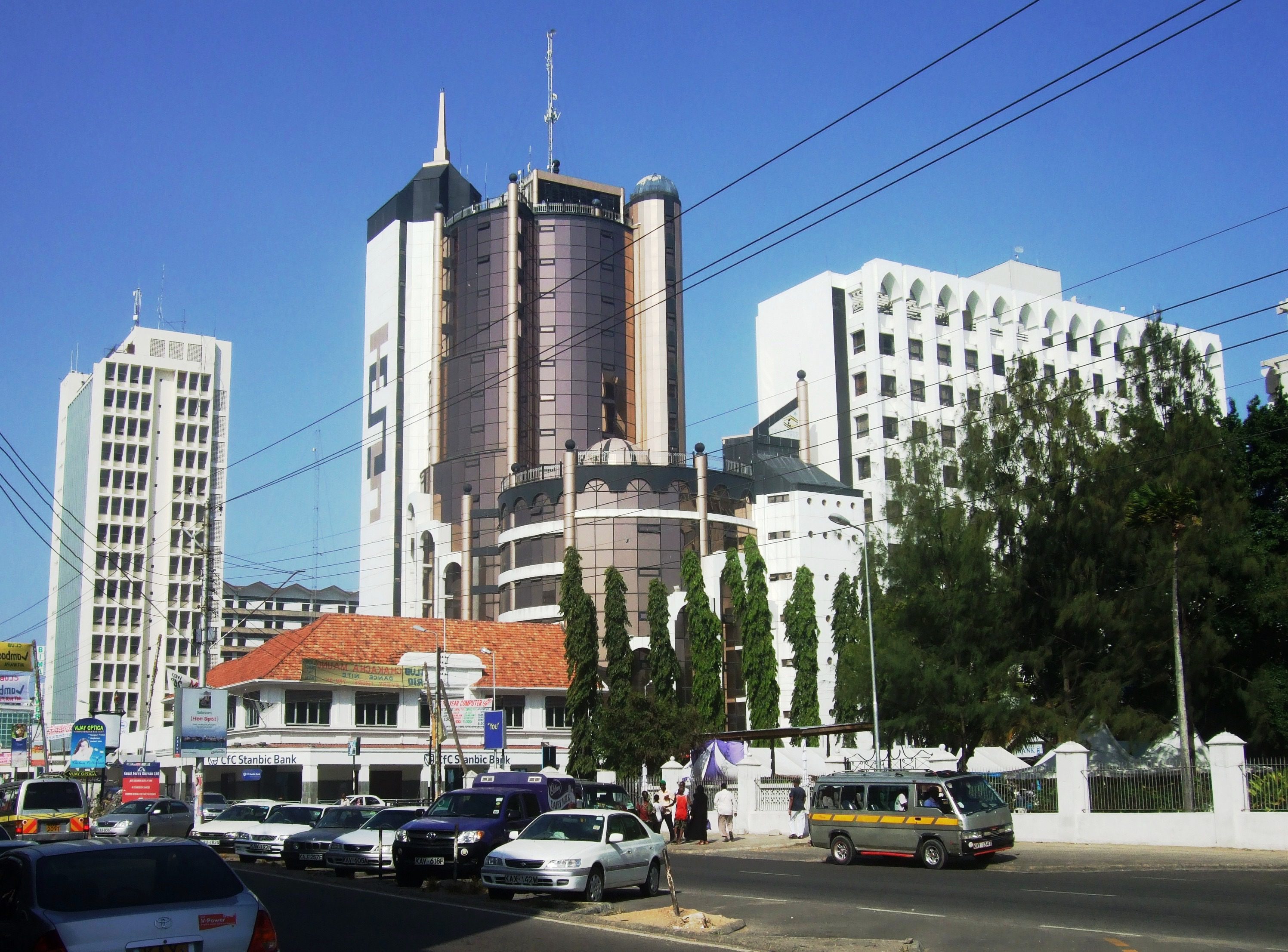
Photo by Victor Ochieng – Flickr: Downtown Mombasa