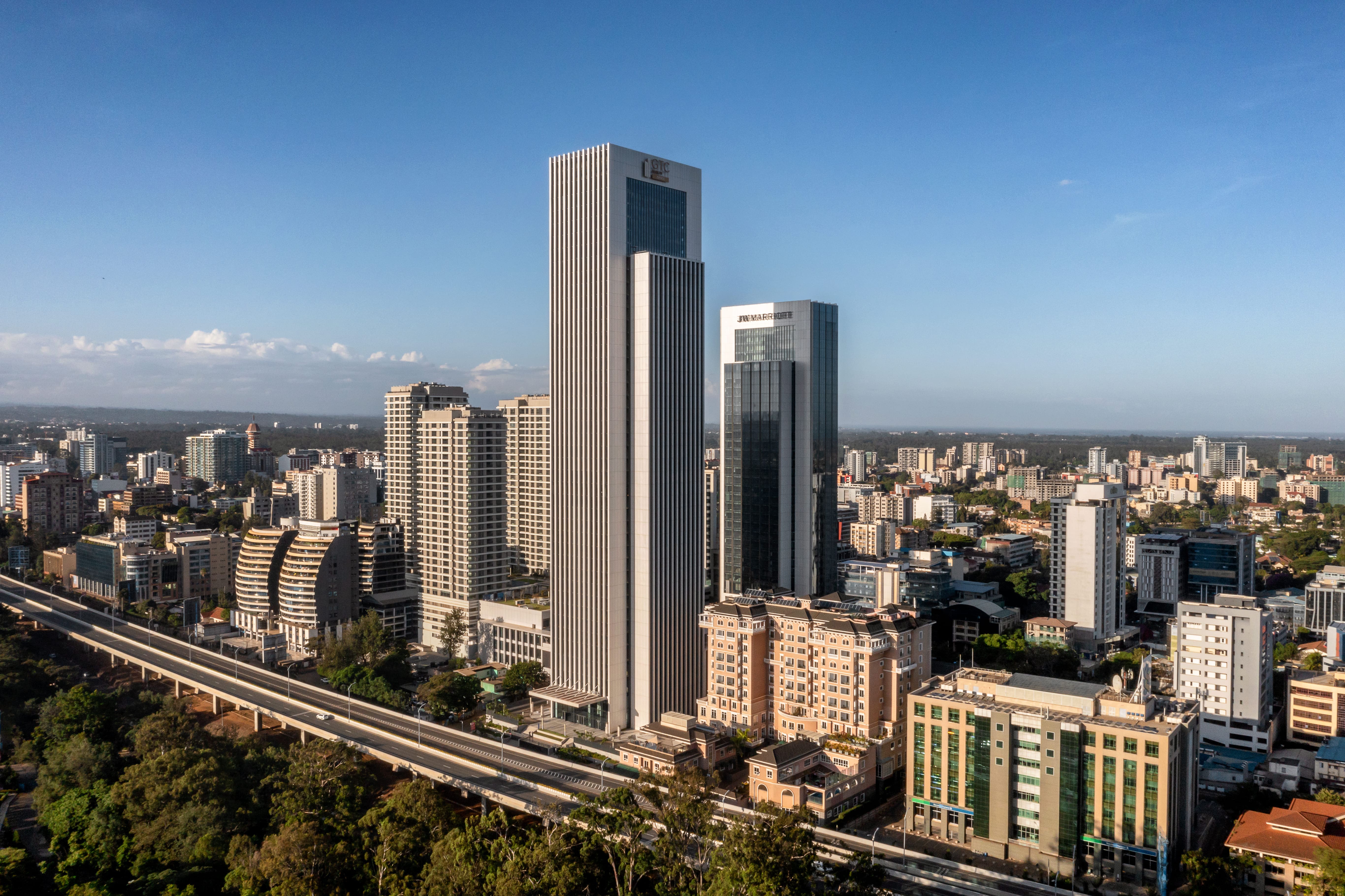

Overview
While mature property markets in the US and UK grapple with high interest rates and sluggish growth, a different story is unfolding in Nairobi. Nairobi’s real estate market has quietly emerged as a global hotspot, delivering returns that are not just competitive but are actively outpacing international benchmarks.
In the year to June 2025, Nairobi’s real estate market delivered a staggering 13.28% total return, a figure that should make any global investor sit up and take notice.1 This isn’t a fleeting, speculative spike; it’s a performance rooted in powerful, long-term fundamentals. A chronic housing shortage, rapid urbanization, and a unique cash-driven market structure have created a resilient and high-growth environment.
For those looking to capitalize on this trend, the data points to clear opportunities, particularly in detached homes and the highly lucrative off-plan segment.
Deconstructing the Double-Digit Returns
Nairobi’s impressive performance is built on a balanced foundation of both capital growth and strong rental income. The 13.28% total return breaks down into:
- 7.8% Capital Appreciation: A healthy increase in property values across the board.1
- 5.5% Rental Yield: A robust income stream that provides investors with consistent cash flow, well above the global average.1
However, the real story lies in the market’s finer details. A clear trend has emerged showing a “flight to quality and space.” Detached homes (villas and townhouses) are dramatically outperforming apartments. In the second quarter of 2025, prices for detached houses grew at their fastest pace in nine years, pushing the annual price growth for this segment to a remarkable 10.9%.3
This demand is fueling price growth in prime, low-density suburbs like Muthaiga (+3.5% quarterly), Karen (+2.5%), and Runda (+2.2%).3 The prime residential market as a whole remains robust, with sales prices increasing by 5.63% year-on-year in the first half of 2025, while prime rents grew by an even stronger 7.96%.5
The Off-Plan Goldmine: An 18% Investment Opportunity
For investors willing to enter the market at the development stage, the returns are even more compelling. Analysis of off-plan projects in 2025 revealed an average return on investment of 18.06%.1
Off-plan investments allow buyers to secure property at a discount before it’s built, often with flexible installment payment plans. As construction progresses and material costs rise, developers typically increase prices for later phases, allowing early investors to capture significant capital appreciation before the project is even completed.8
While this strategy comes with inherent risks, such as developer delays or defaults, the potential upside is unmatched in the current market.8 The key is thorough due diligence on the developer’s track record and legal safeguards in the purchase agreement.
A Global Perspective: Why Nairobi Stands Out
When placed against other global markets, Nairobi’s performance is exceptional. While high-growth hubs like Dubai post higher capital gains, they often come with greater volatility. Mature markets in the West, meanwhile, are struggling to deliver meaningful growth.
Nairobi occupies a unique “sweet spot,” offering strong, sustainable growth combined with healthy rental yields.
Table 1: Global Real Estate Market Performance Comparison (2025 Y-o-Y Data)
| Country/City | Capital Appreciation (Annual Y-o-Y %) | Average Rental Yield/Growth (Annual Y-o-Y %) | Key Data Source |
| Nairobi (Overall) | 7.8% | 5.5% (Yield) | 1 |
| Nairobi (Detached Homes) | 10.9% | Not Specified (but higher than average) | 3 |
| Dubai | 23.9% | 6.2% (Growth) | 10 |
| South Africa | 3.7% | 10.36% (Yield) | 11 |
| UK | 2.8% | 5.7% (Growth) | 13 |
| USA | 0.2% | 2.4% (Growth) | 14 |
| Singapore | 3%-5% (Forecast) | Not Specified | 15 |
What truly sets Nairobi apart is its structural resilience. The market is overwhelmingly driven by cash buyers, with a mortgage-to-GDP ratio of just 1.86%.16 This insulates it from the high-interest-rate environment that has put the brakes on housing markets in the US and Europe. While borrowing costs stifle demand in leveraged economies, Nairobi’s real estate market moves to the rhythm of its own powerful fundamentals.
The Engine Room: What’s Fueling the Growth?
Nairobi’s real estate boom is powered by a convergence of potent, long-term drivers:
- A Structural Housing Deficit: Kenya has a cumulative housing deficit of over 2 million units, with an annual demand of 250,000 new homes far outpacing the yearly supply of just 50,000.17 This massive, persistent imbalance puts constant upward pressure on both property prices and rents.
- Favorable Demographics: With a rapid urbanization rate of 4.4%, Kenya sees half a million people move to its cities every year, creating a relentless stream of new demand for housing.17
- Economic Growth: Kenya’s economy is projected to grow by a solid 4.5% to 5.3% in 2025, supporting wealth creation and expanding the middle and upper classes who are driving demand for quality housing.5
- Infrastructure Investment: Major projects like the Nairobi Expressway and the expansion of key bypasses are improving connectivity, reducing commute times, and unlocking property value in previously inaccessible suburbs and satellite towns.5
The Investor Takeaway
For investors looking to tap into this growth, the data offers a clear roadmap. The prime opportunities lie in catering to the demand for space, security, and quality.
Low-density, gated communities with detached or semi-detached homes are the top-performing asset class. Emerging suburbs like Langata offer a more accessible entry point than established areas like Karen but provide similar access to top-tier schools and amenities, with comparable estates reporting rental yields averaging 8%.22
The “build-to-sell” model targeting middle-income buyers in suburbs like Westlands and along Kiambu Road also presents a volume-driven opportunity.8
Ultimately, Nairobi’s property market presents a compelling case for portfolio diversification. It offers world-beating returns driven by undeniable fundamentals and is structurally insulated from the global headwinds battering other markets. For savvy investors, the time to look at Nairobi is now.
Sources
- https://www.the-star.co.ke/business/2025-09-10-property-prices-in-kenya-rise-fastest-among-global-markets
- https://www.hassconsult.com/hassnews
- https://www.businessquest.co.ke/hass-property-indicesland-in-nairobi-suburbs-rose-by-1-6pc-q2/
- https://kenyanwallstreet.com/landlords-slow-down-on-increasing-rent-prices-in-q2/
- https://www.businessquest.co.ke/knight-frank-kenyas-real-estate-sector-grows-5-6pc-in-h1-2025/
- https://theeconomistmag.com/2025/08/19/knight-frank-kenyas-real-estate-sector-grows-5-6pc-in-h1-2025/
- https://content.knightfrank.com/research/1487/documents/en/kenya-market-update-h2-2024-11880.pdf
- https://commercialpropertykenya.com/nairobi-property-market-in-2025-and-where-to-invest-now/
- https://valustrat.com/pages/dubai-real-estate-prices-rise-23-9-percent-in-q2-2025-as-sales-hit-record-highs
- https://www.myproperty.co.za/news/market-and-opinion/property-prices-hold-steady-as-buyer-preferences-shift-towards-smaller-homes-11-08-25
- https://everythingproperty.co.za/south-africas-top-buy-to-let-suburbs-betterbond-commentary/
- https://www.ons.gov.uk/economy/inflationandpriceindices/bulletins/privaterentandhousepricesuk/september2025
- https://www.zillow.com/home-values/102001/united-states/
- https://prop.sg/singapore-private-residential-property-market-outlook-h2-2025/
- https://kmrc.co.ke/assets/file/2604ffdf-state-of-the-banking-mortgage-market.pdf
- https://www.worldbank.org/en/country/kenya/publication/kenya-needs-2-million-more-low-income-homes-building-them-would-boost-its-economic-growth
- https://cytonn.com/topicals/review-of-the-2
- https://cultureafrican.wordpress.com/tag/housing-statistics/
- https://www.scribd.com/document/684624876/nairobi-metropolitan-area-residential-report-2023-full-report-1
- https://southfront.co.ke/resources/sustainable-green-building/real-estate-2025-growth-prospects-and-market-outlook_18
- https://www.businessdailyafrica.com/bd/sponsored/marigold-ii-and-the-investment-case-for-langata-townhouses-5222824
- https://www.cnbcafrica.com/media/7757429636771/kenya-pulls-further-ahead-of-international-property-markets-in-2025